-
 play_arrow
Pride 365 The Soundtrack of Pride - All Year Long


273 Transgender People Were Reported Murdered Worldwide in the Past Year, New Report Finds
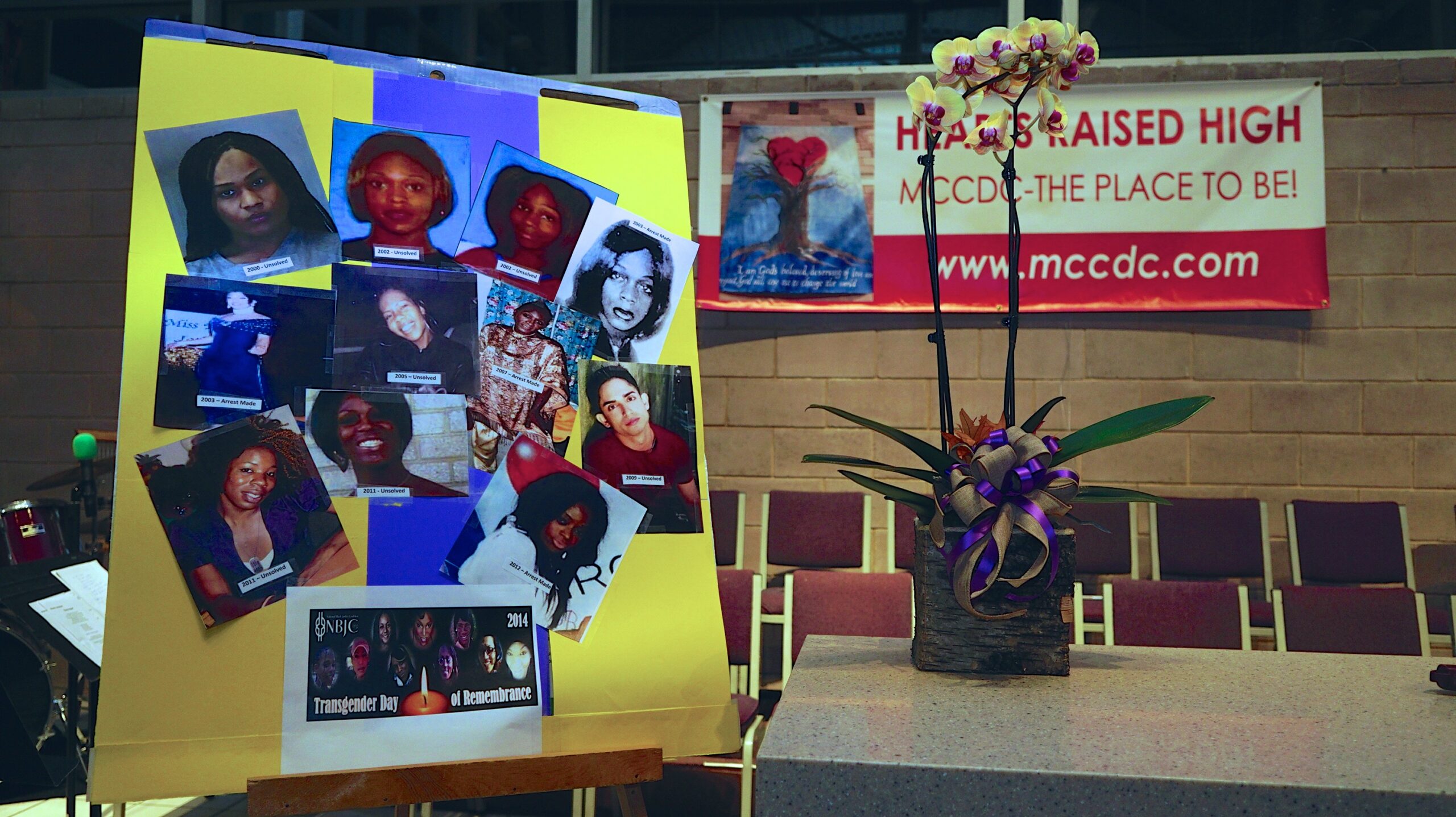
New data released ahead of Transgender Day of Remembrance documents killings across 35 countries, with Black and Brown trans people, trans women and sex workers disproportionately represented among those reported killed.
As communities prepare to observe Transgender Day of Remembrance on Friday, November 20, a new global report has documented 273 reported murders of transgender and gender-diverse people over the past year, a stark reminder of the violence facing trans communities around the world.
The annual Trans Murder Monitoring report from TGEU, Trans Europe and Central Asia, tracks reported murders of transgender and gender-diverse people globally. Its latest findings cover October 1, 2025, through September 30, 2026, documenting cases in 35 countries.
The report, released November 11, recorded an average of one reported murder every 32 hours. It also found that the United States accounted for 29 of the documented cases.
The numbers are not a complete accounting of the violence experienced by trans communities. TGEU warns that its monitoring depends on cases being reported and documented, and that shrinking civic space, hostile political environments and funding cuts are making that work more difficult.
The numbers reveal who is most at risk
The report found that the patterns of violence disproportionately affect particular communities within the transgender population.
Of the 273 reported murders:
-
75% of victims were Black or Brown transgender people.
-
95% were transgender women or transfeminine people.
-
32% were sex workers, the most targeted group among occupations identified in the report.
-
5% were minors under the age of 18.
TGEU’s findings point to the intersection of racism, misogyny, transphobia, xenophobia and discrimination against sex workers as factors shaping the risks faced by many trans people.
The report also documented differences across regions. Latin America and the Caribbean accounted for 69% of reported murders, with Brazil accounting for roughly one-third of the global total. Europe recorded 13 cases, the highest total since 2023, while the United States recorded 29.
The organization cautions against treating these figures as a direct measure of relative risk between countries or regions. Reporting infrastructure, investigative capacity and the willingness or ability of families and organizations to identify victims as transgender can significantly affect what is recorded.
Fewer recorded murders does not necessarily mean less violence
The 273 cases recorded this year are fewer than the 281 reported in TGEU’s previous monitoring period.
But the organization cautions against interpreting that difference as evidence that violence is declining.
The monitoring project counts documented murders, not every death affecting transgender people, and the data is subject to underreporting. TGEU says some monitoring partners in Asia were unable to provide data this year because of insufficient resources and even electricity access.
In its report, TGEU notes that the overall number of recorded murders is below 300 for only the second time in a decade, while warning that the monitoring process itself is increasingly difficult.
The distinction matters. A lower documented total may reflect changes in reporting capacity, access to information and the ability of local organizations to track cases, rather than a meaningful improvement in safety.
The report also found that a perpetrator was arrested in only 21% of cases in which local authorities documented a response, raising additional concerns about accountability.
A U.S. perspective on the losses being remembered
The global Trans Murder Monitoring figures offer one view of violence. Other organizations maintain memorial archives that use different definitions and track different kinds of loss.
The Trans Remembrance Project, maintained by Advocates for Trans Equality, currently lists 62 transgender people remembered across 30 states and Washington, D.C., in its 2026 memorial archive. Its categories include people lost to violence and suicide, among other circumstances, and should not be directly compared with TGEU’s murder-only monitoring methodology.
The archive currently identifies 28 deaths attributed to violence and 21 to suicide within its memorial. Its approach is broader than the TGEU dataset, which specifically tracks reported murders.
The project was created to honor individuals, preserve their stories and help communities remember the people behind the statistics.
The origins of Transgender Day of Remembrance
Transgender Day of Remembrance has been observed every November 20 since 1999.
The observance began with transgender activist Gwendolyn Ann Smith, who organized a vigil in memory of Rita Hester, a Black transgender woman murdered in Boston in November 1998. The original vigil honored Hester and other transgender people lost to violence, establishing a tradition that has grown into an international observance.
Today, vigils, memorial services and community gatherings take place across the United States and internationally. Many include readings of names, candlelight ceremonies, reflections from community members and opportunities to support trans-led organizations.
The day is intended not only to mourn those who have died, but also to confront the conditions that leave transgender people vulnerable to violence and discrimination.
Remembering lives, not just statistics
The data released ahead of this year’s remembrance offers a sobering snapshot of reported violence, but it cannot capture the full lives of those lost, the grief experienced by families and friends, or the impact on communities.
TGEU board member Purity Tumukwasibwe reflected on the dangers faced by Black trans women, saying, “Our safety is never guaranteed.”
That reality is reflected in the report’s findings, particularly the disproportionate number of Black and Brown transgender people, trans women and sex workers among those reported killed.
As Transgender Day of Remembrance approaches, the findings serve as a call for more than memorials. TGEU urges governments and institutions to strengthen anti-discrimination and hate-crime protections, support trans human rights defenders, address the vulnerabilities faced by sex workers and migrants, and ensure that violence against transgender people is investigated and prosecuted.
Tomorrow, communities will gather to remember those whose lives were taken. The work of making those lives safer continues long after the candles are extinguished.
Photo: Ted Eytan via Flickr/Creative Commons


ON AIR NOW
LATEST
TOP CHART
-

1
play_arrowIn Your Eyes (Main)
-

2
play_arrowMovin' To The Sun [Radio Edit]
-

3
play_arrowLove Sensation (Afterhours Radio Edit)
-





Pride 365 is a registered trademark of the Capital Pride Alliance (CPA). CPA is a nonprofit organization dedicated to serving the needs of the LGBTQ+ community, through educational programs, major events, fundraising, outreach and advocacy, providing platforms for visibility, and supporting the work of our many community organizations and local businesses.


Post comments (0)