-
 play_arrow
Pride 365 The Soundtrack of Pride - All Year Long


The 2026 Midterms’ LGBTQ+ Paradox: Historic Political Wins, But New Anti-Trans Restrictions in Four States
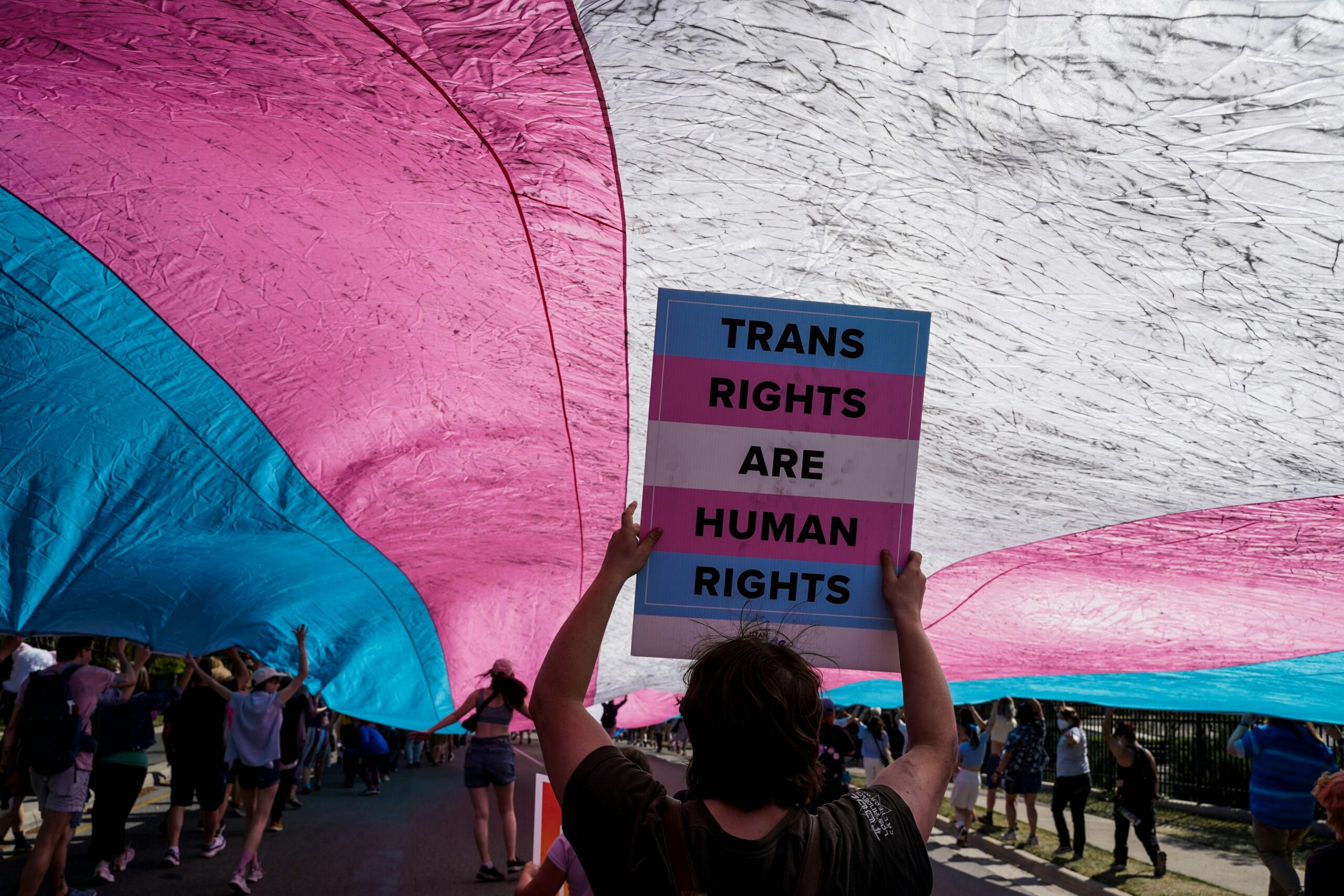
Democrats celebrated major election victories and LGBTQ+ candidates made history, but voters in Arizona, Colorado, Nebraska and Washington also approved measures restricting transgender students’ rights.
WASHINGTON, D.C. – The 2026 midterm elections delivered a historic moment for LGBTQ+ political representation, but the results also exposed a troubling contradiction in the country’s evolving attitudes toward transgender equality.
While Democrats scored major victories across the country and LGBTQ+ candidates broke new barriers in federal and state government, voters in four states approved ballot measures targeting transgender students. The results have left LGBTQ+ advocates celebrating unprecedented political progress while confronting another wave of restrictions on transgender Americans.
It is a complicated election outcome that demonstrates why the fight for LGBTQ+ equality is far from over.
A historic night for LGBTQ+ representation
There was plenty to celebrate on Election Night.
New Hampshire Congressman Chris Pappas made history by becoming the first openly gay man elected to the U.S. Senate. He will join Wisconsin Senator Tammy Baldwin, the first openly lesbian person elected to the chamber, when he takes office in January.
Across the country, LGBTQ+ candidates secured congressional victories, including lesbian Army veteran Cait Conley in New York, gay Indiana state Senator J.D. Ford, and other candidates expanding LGBTQ+ representation in Washington.
Delaware Congresswoman Sarah McBride, the first openly transgender woman elected to Congress, also won reelection.
The victories extended beyond Capitol Hill. LGBTQ+ candidates made history in state legislatures and other elected offices, including Georgia, where Bentley Hudgins became the state’s first openly transgender and nonbinary state lawmaker.
The results represent a significant milestone for a community that has spent decades fighting for a seat at the political table.
Four states approve new restrictions targeting transgender students
But while LGBTQ+ candidates were celebrating victories, voters in four states approved measures that could significantly affect transgender students.
In Arizona, Proposition 318 passed with approximately 59% support. The measure expands restrictions on transgender students in K-12 schools, covering participation in sports as well as access to bathrooms, locker rooms and other facilities consistent with their gender identity. The new requirements are scheduled to take effect January 1.
Colorado voters approved Proposition 134, restricting participation in school and college athletic teams based on sex assigned at birth. The measure passed with approximately 53% support.
Washington voters approved Initiative 638, which restricts transgender girls from participating in girls’ school sports. The measure received more than 56% support and includes a requirement for healthcare-provider verification for athletes seeking to participate in female-designated sports.
Nebraska voters also approved Initiative Measure 442, a constitutional amendment restricting participation in girls’ and women’s school and college sports based on the measure’s definition of sex.
The results were particularly notable in Colorado and Washington, two states with Democratic-led governments that had resisted adopting similar restrictions through their legislatures.
Instead, supporters of the measures took the issue directly to voters, where they found enough support to secure victories.
For transgender students and their families, the consequences extend beyond athletics. The debate touches on participation, belonging, privacy and the ability to navigate everyday school life without discrimination.
Not every state went in the same direction
The election wasn’t entirely defined by setbacks for transgender rights.
In Missouri, voters rejected Amendment 3, a proposal that combined restrictions on gender-affirming medical treatment for minors with changes to the state’s constitutional protections for reproductive rights.
The defeat prevented the proposed constitutional changes from advancing, although existing restrictions on gender-affirming care for minors in Missouri remain in place.
Vermont delivered a particularly significant victory for LGBTQ+ equality.
Voters approved Proposal 4, adding explicit protections based on sexual orientation, gender identity and gender expression to the state constitution. The amendment strengthens Vermont’s constitutional commitment to equal protection and provides an additional layer of protection for LGBTQ+ residents.
Virginia voters also approved a constitutional amendment recognizing marriage equality, adding another significant victory to the election’s LGBTQ+ rights record.
Together, these outcomes illustrate how dramatically the political landscape can differ from one state to another.
The political contradiction LGBTQ+ advocates cannot ignore
The election results have prompted difficult questions for LGBTQ+ advocacy organizations and political strategists.
How can an election produce record LGBTQ+ representation while simultaneously delivering victories to campaigns seeking restrictions on transgender students?
The answer may lie partly in how voters approach individual candidates compared with specific ballot questions.
A voter may support a Democratic candidate because of economic concerns, healthcare, reproductive rights or opposition to the current administration, while still supporting a restriction on transgender participation in school sports.
The two outcomes are not necessarily contradictory in the minds of individual voters, even though their consequences can be deeply conflicting for LGBTQ+ communities.
The Trevor Project has also highlighted the emotional toll of the political environment. In its November 4 analysis of the midterms, the organization reported that 94% of transgender and nonbinary young people surveyed said recent anti-LGBTQ+ politics caused them stress or anxiety, while more than eight in ten said those politics made them feel unsafe.
That reality is an important reminder that political victories and setbacks are not simply statistics. They affect real young people, their families, their schools and their sense of belonging.
The fight continues beyond Election Night
For LGBTQ+ advocates, the 2026 midterms offer both reasons for optimism and a clear warning against complacency.
The election demonstrated that LGBTQ+ candidates can win competitive races, break historic barriers and represent their communities at the highest levels of government.
It also demonstrated that transgender equality remains vulnerable to political campaigns that place the rights of a relatively small population before voters as a standalone issue.
The next chapter will involve more than celebrating electoral victories. Legal challenges, state-level advocacy and continued community organizing will help determine how these newly approved measures are implemented and whether they withstand constitutional scrutiny.
The LGBTQ+ community has reason to celebrate the doors that opened this election. But the doors that remain closed, particularly for transgender young people, deserve just as much attention.
Because representation matters. And so does making sure that every member of our community can live, learn and participate in public life with dignity.
(photo: Yasmin Peyman)

ON AIR NOW
LATEST
TOP CHART
-

1
play_arrowIn Your Eyes (Main)
-

2
play_arrowMovin' To The Sun [Radio Edit]
-

3
play_arrowLove Sensation (Afterhours Radio Edit)
-





Pride 365 is a registered trademark of the Capital Pride Alliance (CPA). CPA is a nonprofit organization dedicated to serving the needs of the LGBTQ+ community, through educational programs, major events, fundraising, outreach and advocacy, providing platforms for visibility, and supporting the work of our many community organizations and local businesses.


Post comments (0)